
My Role
1.Study Design & Framework: Designed the study structure, aiming to provide a comprehensive analysis using both qualitative and quantitative methods.
2.Execution: Did Think Aloud Session and closely observed and documented real-time user interactions with the app. Additionally, I conducted interviews with users to gain deeper insights into their challenges and areas where the app could be improved.
3.Analysis : Interpreted the SUS ratings, ensuring that each data point was transformed into meaningful insights.
4.Synthesis: Synthesized qualitative feedback, organizing it into clear themes to provide guidance for actionable next steps.
THE PROCESS

Understanding demographic

Research
Recommendations

Our preliminary demographic study revealed that DoorDash holds a 66% market share. Furthermore, over 60% of the survey respondents from various states in the United States preferred DoorDash over other platforms. Notably, these participants are mostly from the Millennial and Gen Z groups.
Understanding Demographics
Even though they prefer DoorDash, there is a desire for improvement in communication , package handling, and managing recurring orders.
"There's definitely a need for better communication regarding the availability of items. It's disheartening to place an order, only to be informed later that some items aren't available."
"I've experienced the misplacement of items more than once. It’s disappointing when you open your order to find that something's missing or incorrect, especially after a long wait."
"There's definitely a need for better communication regarding the availability of items. It's disheartening to place an order, only to be informed later that some items aren't available."
Evaluation of DoorDash Focuses on
1.Assessing User Satisfaction Across Diverse Demographics: The study aims to evaluate the satisfaction levels among different user groups using DoorDash for their food and grocery delivery needs. This includes both U.S. residents and international students, providing a comprehensive understanding of how the app serves a varied customer base.
2.Highlighting Opportunities for Enhancement: By analyzing user experiences, the study will pinpoint specific areas where DoorDash could improve its services. This might include enhancements in delivery options, product range, or customer support, all aimed at better catering to the diverse needs of its users.
3.Analyzing Varied User Experiences: The study will explore the differences and similarities in the shopping experiences of U.S. citizens and international students using DoorDash. This comparison will help understand if the app equally meets the needs of these distinct user groups or if tailored improvements are necessary.
Can you guide me through your experience of downloading and setting up the DoorDash app?
What types of food or grocery items do you typically order through DoorDash?
How often do you find yourself using the DoorDash app for your orders?
What are your preferred payment methods when using DoorDash?
Could you share your experiences with the delivery process when ordering from DoorDash?
Do you live in close proximity to any of the stores or restaurants you order from on DoorDash?
How would you compare the experience of ordering via DoorDash to physically visiting a store or restaurant?
Are you subscribed to any premium services or loyalty programs offered by DoorDash, such as DashPass?
Have you ever had to cancel or modify an order on DoorDash, and what was that process like?
Is there any aspect of the DoorDash app or service that you think could be improved?
Have you ever had to reach out to DoorDash's customer service, and how was that experience?
Key Questions Used in DoorDash User Interviews
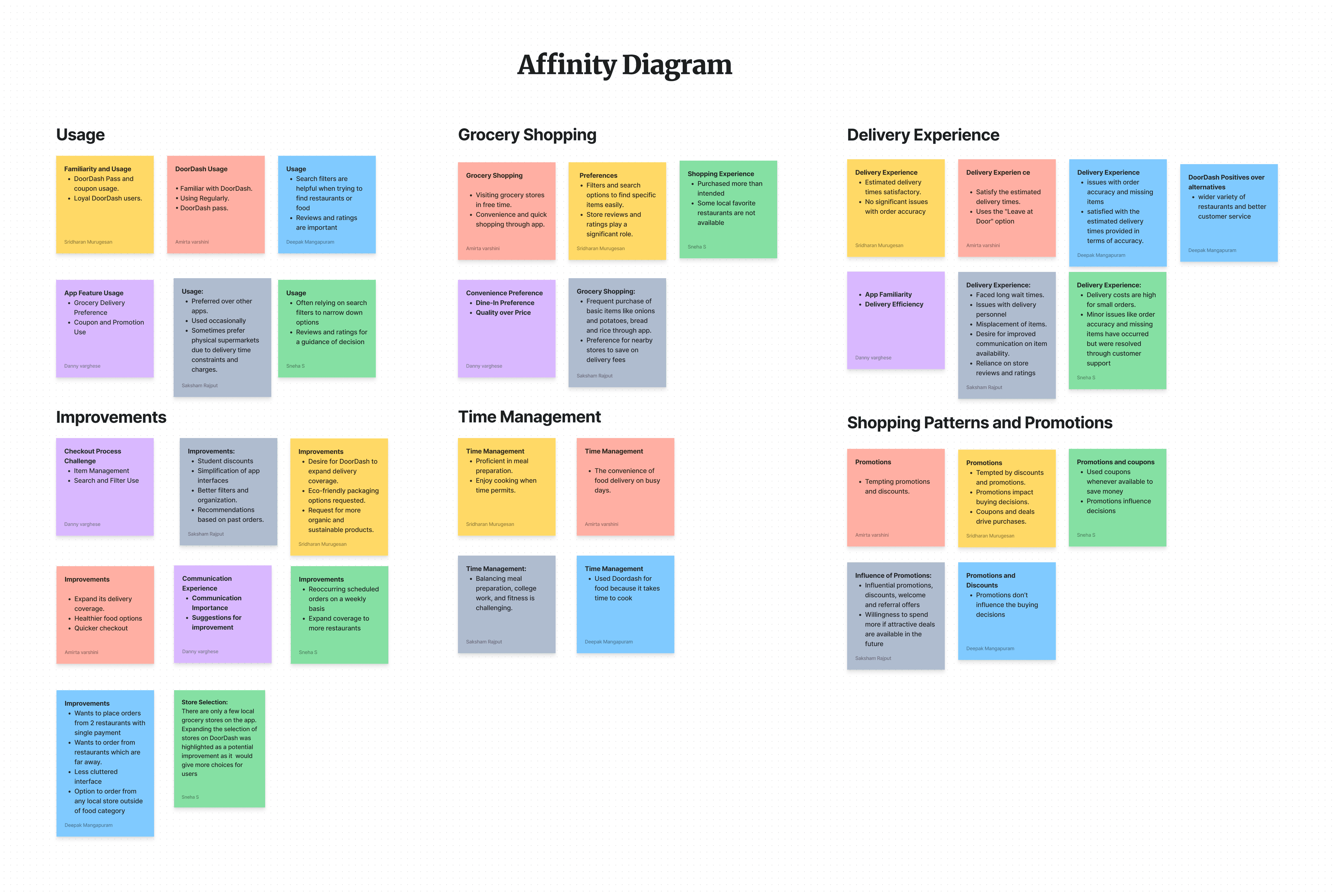
Utilizing affinity mapping, we methodically sorted and arranged the collected data, enabling a clear understanding of user sentiments and challenges. This visual method helped us discern trends, linkages, and principal themes, offering an organized way to process and respond to user input. The collective aspect of affinity diagramming promoted a comprehensive grasp of the information, steering our approach towards developing solutions that effectively meet user requirements and address their issues.
Affinity Mapping
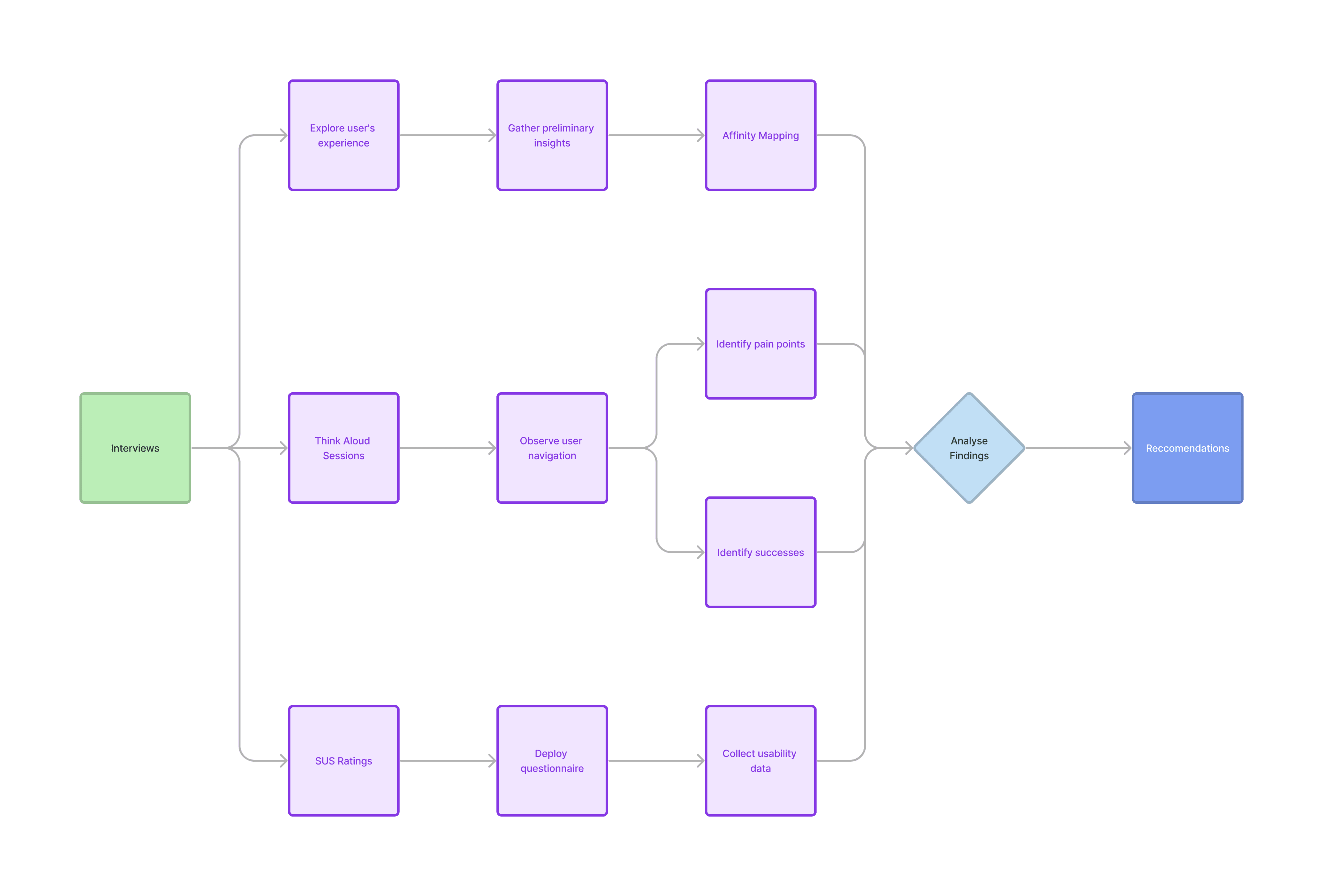
Interviews: These initial explorative conversations provided early insights, forming an overview of the user experience.
Think Aloud Sessions: Under detailed observation, these sessions revealed specific areas of difficulty and success in user navigation.
SUS Ratings: We utilized the System Usability Scale questionnaire for assessmen
The study utilized a combination of qualitative and quantitative approaches, notably think-aloud sessions and user interviews, to extract in-depth understanding of user experiences and challenges.
Methodology
Insights from Interviews
In our interviews, it was commonly observed that participants had a preference for physical grocery shopping, appreciating the tactile experience and the autonomy to select items personally. The role of reviews and ratings was significantly highlighted for online grocery shopping, with many participants relying on feedback for their purchasing decisions. The necessity for effective communication was deemed crucial, particularly for ensuring timely and clear updates during the delivery process. A notable concern was the high delivery costs, which were frequently cited as a negative aspect. Participants also stressed the importance of a more user-friendly app interface and recommended expanding the variety of grocery stores on the platform. Additionally, the functionality of search filters was underscored as an essential element to improve the efficiency of online shopping.
App Navigation: People find it hard to look for things or set up delivery times. It's not easy to find what you need or get help on how to do things.
The creation of user personas was pivotal in assessing the app from a user-centered perspective. We gathered varied insights, needs, and challenges from user interviews and affinity mapping, which enabled us to develop detailed and nuanced personas. These personas were more than just basic profiles; they intricately captured the varied situations and sentiments of DoorDash users, providing a comprehensive view of their experiences with the app, from browsing to delivery.
Persona
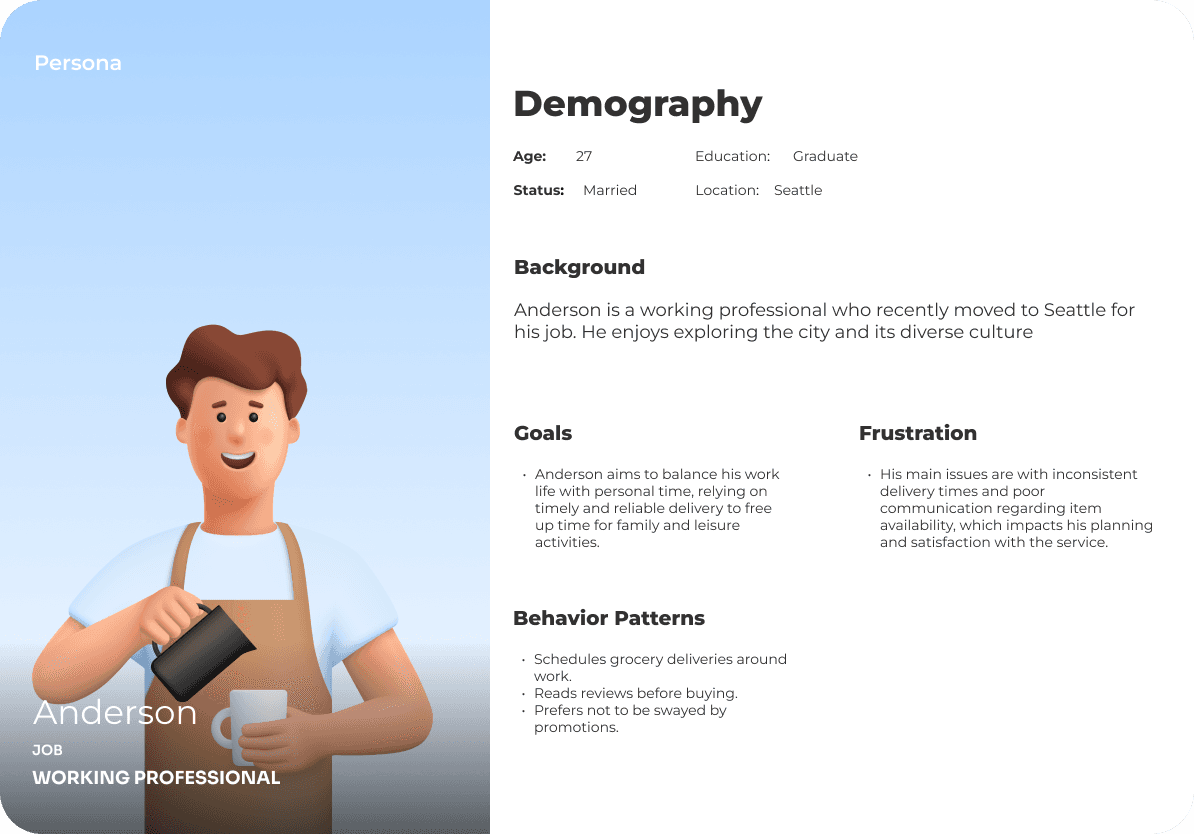
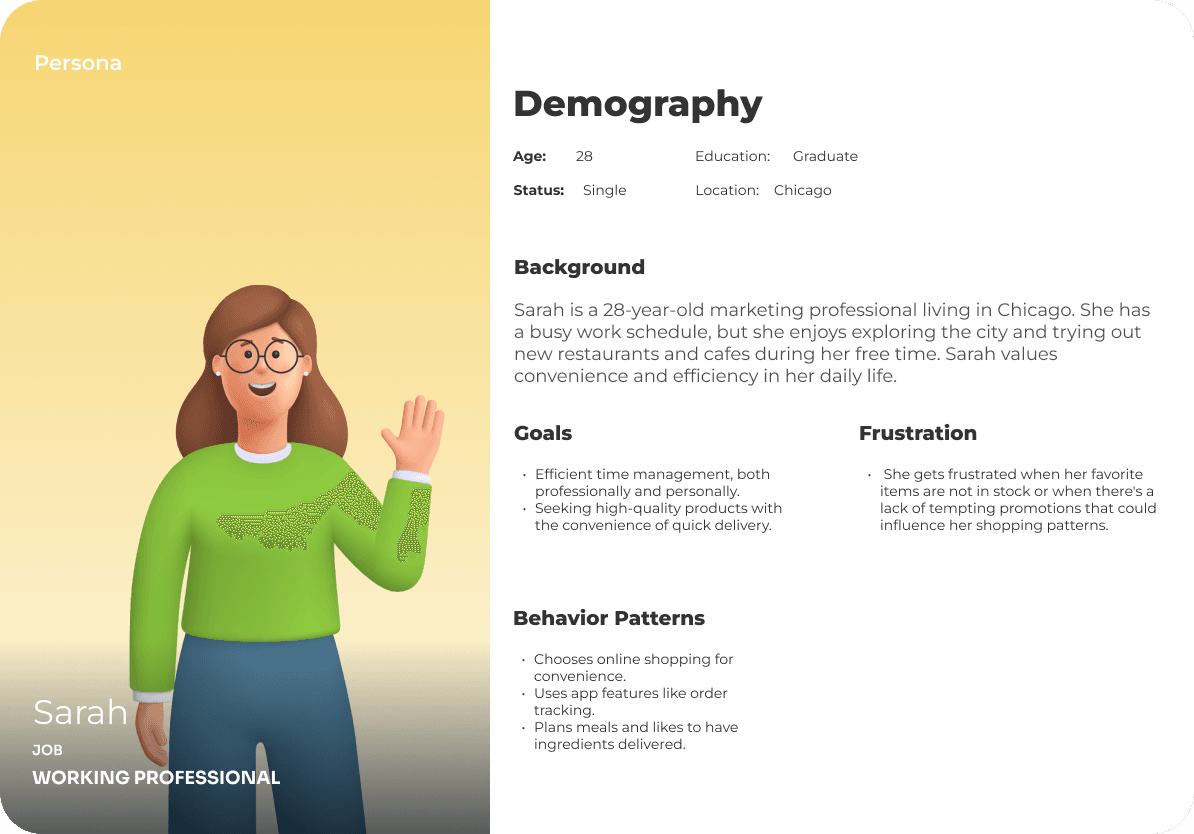
We surveyed to determine who purchases groceries online and discovered that DoorDash is quite popular, particularly among Gen Z graduate students. We met with ten different users in this group to hear about the problems that they were experiencing with the app. We selected to focus on this age group since preliminary research revealed that they often use the app.
Think Aloud Session
Tasks for users to perform
Participants were asked about their previous experience with the app, motivations for using it, and how frequently they use it. Our team chose to conduct cognitive interviews with the app for two specific tasks to better understand its usability and user experience.
Task 1
Ordering Dietary Items: This task was chosen to assess how easily users could navigate the app to select specific dietary items, which is a common use case. Participants were tasked with ordering specific grocery items, including free-range eggs and the cheapest available chicken breast.
Task 2
Scheduling Orders for Future Dates: Scheduling orders for future dates is a feature that DoorDash offers to users. This task was chosen to gauge the usefulness of this feature, the overall experience of scheduling orders, any potential challenges, and any additional feedback users might have regarding this functionality.
Task Analysis
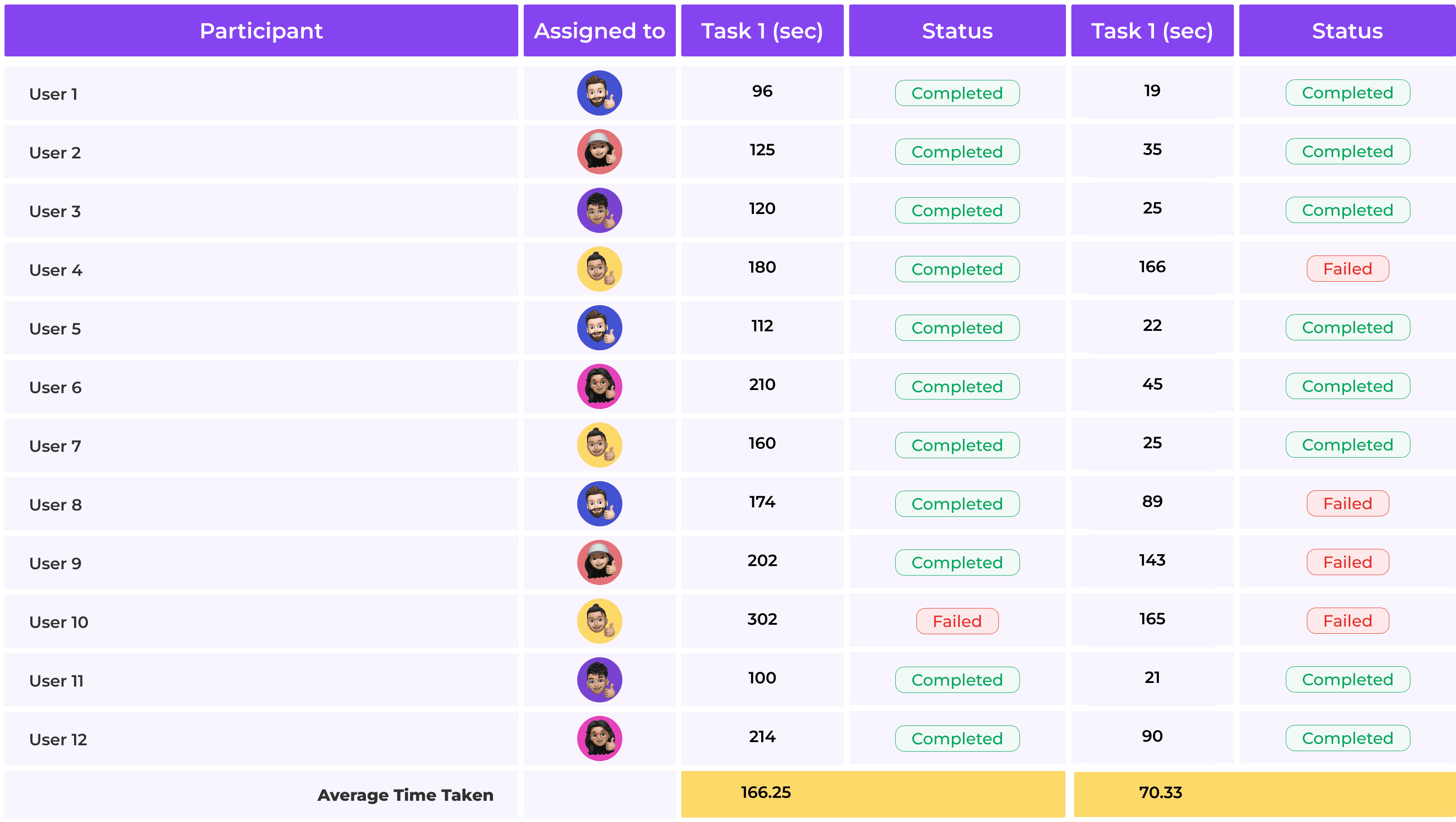
Key Issues Identified
Key Issues Identified
Search Problems: Searching doesn't always show what you're looking for, making it tough to find specific products.
Filter Glitches: Filters don't always clear out when they should, and having two different sets of filters confuses users.
Cart Mix-ups: When ordering from multiple stores, it's hard to know where each item is coming from, which complicates the order.
Scheduling Option Issues: It's hard to find the option to schedule a delivery, and its location changes depending on whether you're using Android or iOS, which is before or after paying.
UI Clutter: The main screen and overall look of the app are too busy, making it feel overwhelming.
SUS Evaluation
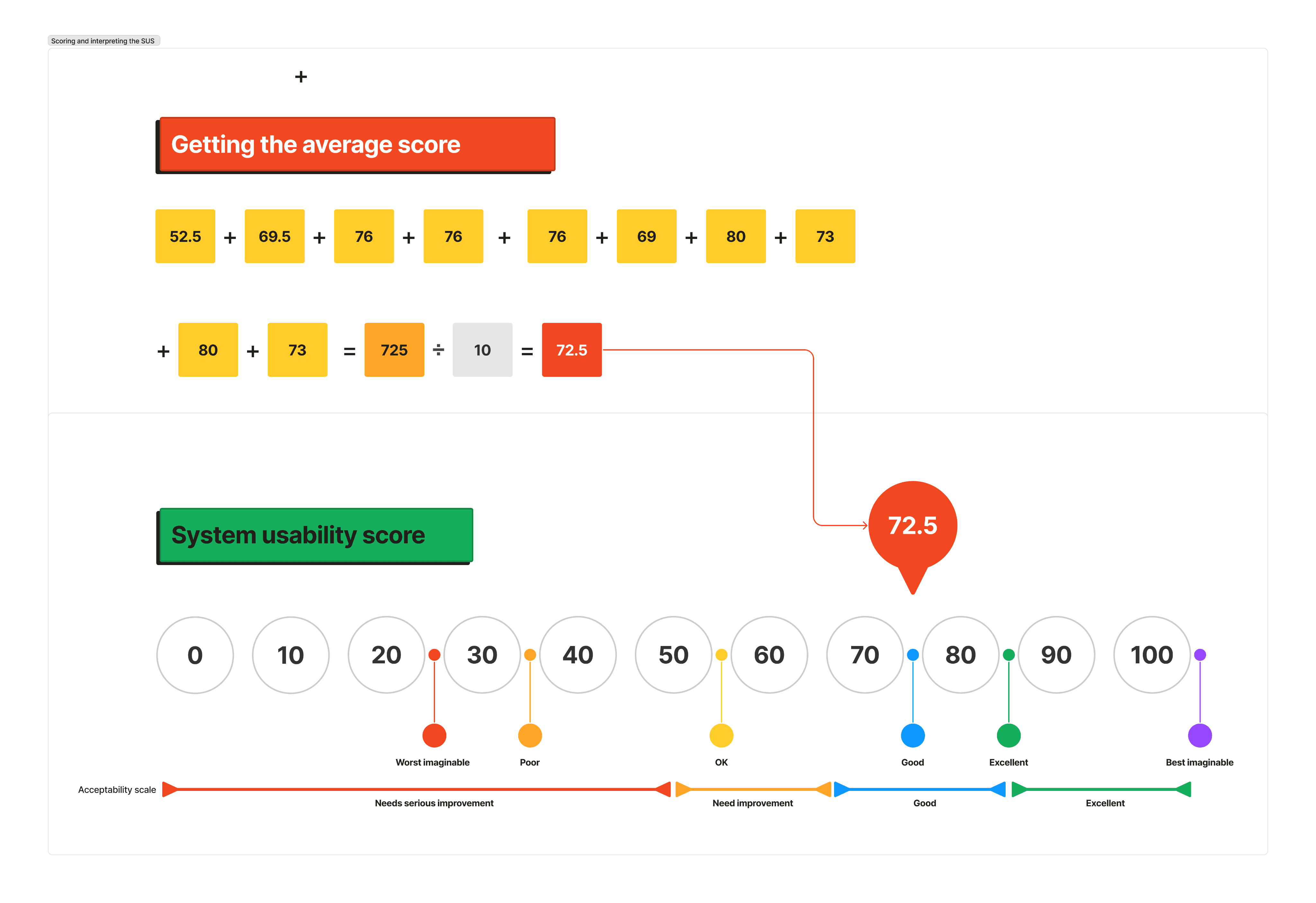
We gave our 10 participants a System Usability Scale (SUS) survey to measure their satisfaction with the app. We analyzed the data to understand how different users perceive and rate the app. The DoorDash app received a usability score of 72.5, which is higher than the industry benchmark of 68 and indicates a more positive user interface and experience. A standard deviation of 14.02 from the mean score, on the other hand, demonstrates a wide variety of user interactions, indicating a degree of unpredictability in user satisfaction levels. Although DoorDash's performance is far above the median, the volatility revealed by the standard deviation implies that the application's usability might be improved in key areas.
Recommendations
1.Better Sorting Features: Create more straightforward and easily accessible options for sorting products and stores.
2.Improved User Instructions: Boost the guidance provided to users, especially for scheduling tasks.
3.Uniform Scheduling Feature: Make sure the scheduling feature is the same on all platforms, including Android and iOS.
4.Streamlined User Interface: Focus on making the homepage less cluttered and organizing categories better for a simpler user interface.
5.Enhanced App Navigation: Improve how users move through the app by adding helpful tips and step-by-step guides.
6.Search Function Upgrades: Refine the search mechanism to return more precise and relevant results.
7.More Intuitive Filters: Rework the filters to be more user-friendly and fix issues like filters not resetting properly.
8.Easier Cart Handling: Make managing the shopping cart simpler, particularly for orders involving multiple stores, to reduce confusion.
9.Prominent Scheduling Options: Increase the visibility and accessibility of scheduling choices in the app to enhance user experience.
My Insights
Being a part of the DoorDash usability research made it clear how important it is to keep the user in mind while designing, considering the various needs of various users. This project demonstrated how important Qualitative and Quantitative methodologies are from interviewing participants to evaluating System Usability Scale (SUS) results. To sum up, this experience has tremendously improved my research and analytical abilities, highlighting user experience design's constant evolution.